Pipe Flushing and Debris Removal Services
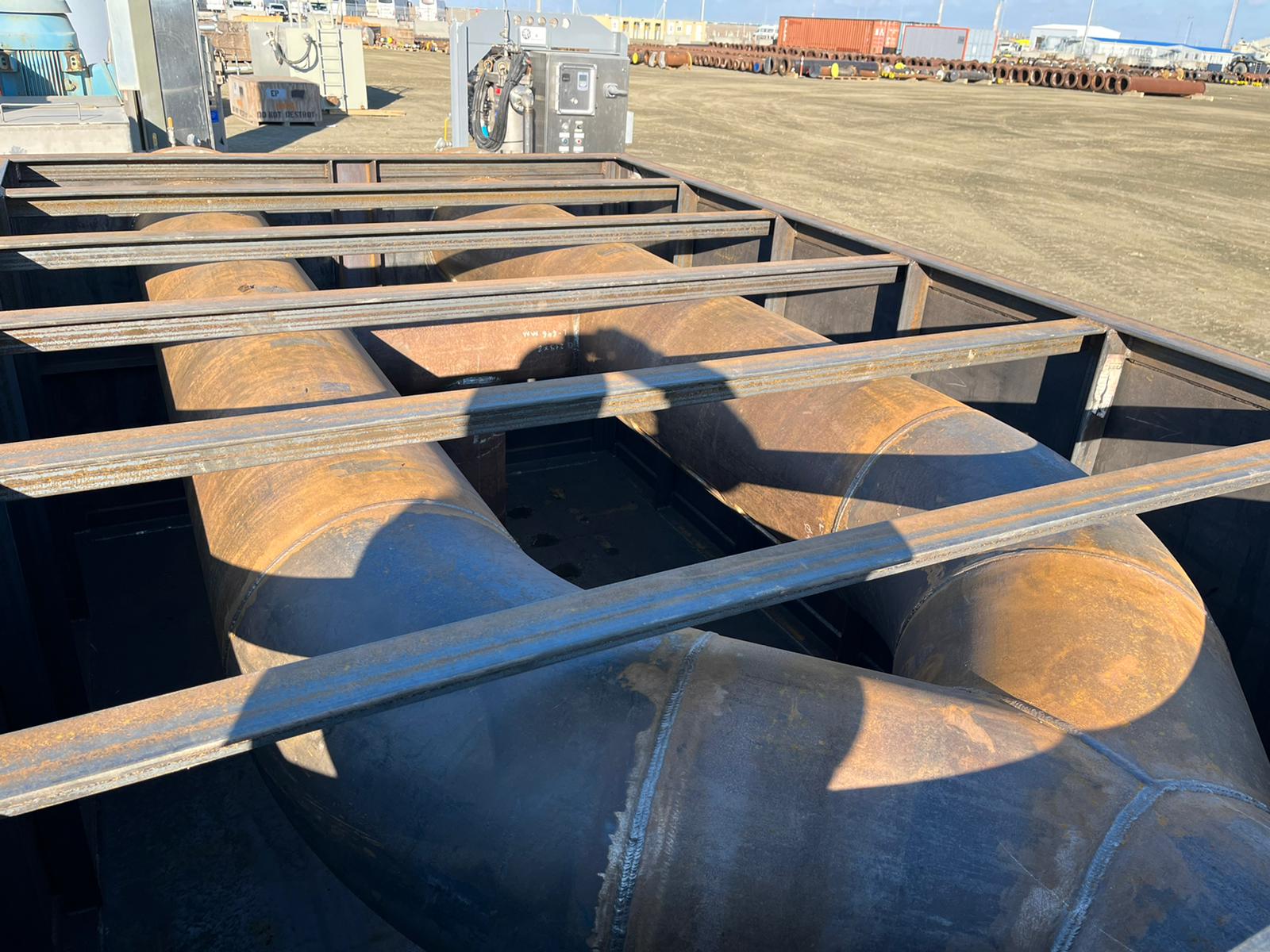
Fluid system flushing removes what construction leaves behind. Before a system is energized, filled or handed over, the piping has to be cleaned of mill scale, weld slag, shavings, dust and sealant — contamination no amount of visual inspection catches, and that damages pumps, valves, instruments and turbines once the system runs.
Volantis Group flushes piping systems on new construction and on systems returning from maintenance outages. The work is built around Fury Flush™, a high-energy method that displaces a frothed slug of aerated water through the line at 40 to 80 feet per second, carrying debris out ahead of it. Cleanliness is verified to Millipore® patch standards, and systems that need it are passivated afterwards.
What Is Inside a New System
A completed piping system is not a clean one. Fabrication and erection deposit material on every internal surface, and the contamination is invisible from the outside:
Mill Scale and Weld Slag
Hot rolling leaves a flaky oxide layer on pipe interiors, and welding deposits slag and spatter along every joint. Both break loose once flow starts.
Fabrication Debris
Cutting, grinding and fitting leave metal shavings, joined by construction dust, loose gasket material and thread sealant.
Oils and Hydrocarbons
Preservation and machining oils coat pipe walls and hold particulate against the surface.
Particles That Settle
A one-inch steel ball settles in water at roughly 10 feet per second. Flush velocity has to exceed the settling velocity of the debris or the line is merely wetted, not cleaned.
Left in place, that material erodes turbine blades and pump components, stops control valves seating, blocks narrow passages, and damages instruments and bearings. The repair cost dwarfs what flushing costs.
The VGI Flushing Method
Flushing is engineered per system, not applied as a generic wash.
1. Assess and plan
Design and cleanliness requirements are reviewed, flush loops and discharge points defined, and the flow and velocity each line needs are calculated. Velocity is the whole argument: flushing a 6-inch line at 60 feet per second takes roughly 5,400 gpm, and overcoming the friction of that flow through 1,000 feet of pipe takes about 670 psig.
2. Flush with Fury Flush™
The Fury Former™ generates the flush — a slug of water with air mixed into it, displaced through the piping at 40 to 80 feet per second. It removes loose mechanical debris, lightly adherent welding slag and corrosion deposits, and replaces conventional pigging. A slug catcher separates large debris and particulate at the discharge.
3. Verify cleanliness
Resultant cleanliness is tested to Millipore® patch standards, with records issued as part of the turnover package.
4. Passivate the water cycle
Where feedwater, condensate and HRSG systems are in scope, the flush is followed by a VolSolv™ passivation treatment that protects the magnetite layer on the steam cycle surfaces.
Where Flushing Applies
Fury Flush is typically used on the systems where debris does the most damage and where pigging is impractical:
- Feedwater systems Including HRSG feedwater and economiser circuits
- Condensate systems Steam cycle condensate and return lines
- Closed cooling water Closed loop cooling and auxiliary cooling circuits
- Fuel gas and fuel oil Fuel supply piping, including branches, cleaned without gas blowing
- General piping Typically any piping up to 36 inches
- Return to service Systems coming back from maintenance outages
Equipment we operate
Fury Former™ and Fury Flush™
The flushing system that generates the aerated slug and drives it through the line.
Slug Catcher
Separates large debris, slugs and particulate at the discharge point during pre-commissioning.
Hydrolazing Units
High-pressure water jetting for targeted cleaning.
Hydroblasting Pumps
Small-volume units for confined areas and high-pressure units for scale, slag and obstructions in major lines.
Related Processes
Flushing is usually one part of a wider cleaning scope:
Deliverables and Why Volantis Group
Each flush is issued with the documentation an operations team needs: the flush procedure and loop definition, executed flush records, Millipore® patch results and a final cleanliness report with the turnover package.
- High-energy method Fury Flush cleans at 40 to 80 feet per second, well above the velocity at which debris drops out of suspension
- Pigging alternative Effective on lines where conventional pigging is impractical or unsafe
- Verified results Cleanliness confirmed to Millipore® patch standards, not judged by eye
- Less water, less equipment The two-phase slug reaches cleaning velocities with lower water consumption than filled flushing
- Complete scope Flushing, hydroblasting, degreasing and passivation from a single provider
- Zero-incident safety culture Reaction forces, discharge control and exclusion zones managed as part of the method
Volantis Group has cleaned and commissioned systems across power, oil and gas, and mission critical projects, most recently a hyperscale data center in Red Oak, Texas. For more on the method, see our articles on fluid system flushing, protecting equipment lifespan through flushing and pre-commissioning.
Have a System That Needs Cleaning?
Send us the system list, cleanliness specification and schedule; we will come back with a flush plan, equipment list and sequence.
Contact Volantis GroupBack to Solutions