Every Facility Type Has Its Own Failure Mode
A refinery turnaround and a wind farm gearbox have almost nothing in common except this: contamination left behind during construction becomes an operating problem on day one. Mill scale in a main steam line reaches the turbine. Residual moisture in a cryogenic circuit becomes hydrate. Particulate in a gearbox becomes varnish, then bearing failure.
Volantis Group works by facility type because the acceptance criteria change with the process. The cleaning sequence, the chemistry, the verification method and the equipment package are all selected for what that plant actually does. The facility types below are the ones we commission, clean, flush, dry and hand over.
Power & Renewables
Generation assets where steam purity, water chemistry and heat rejection decide the heat rate.
Power Plants
Combined-cycle HRSGs, utility boilers, cogeneration and gas turbine plants, where construction debris and mill scale reach the turbine if they are not removed first.
Geothermal
Steam gathering and brine systems running at 220–230 °C, where silica, calcite and sulfide scale are the primary threat to availability.
Wind Farm
Turbine gearbox, hydraulic and pitch systems, where varnish and particulate in the lube oil shorten component life across a 20–30 year design life.
Biomass
Boiler, turbine and fuel handling systems where ash, chlorides and biofouling accelerate corrosion on high-temperature surfaces.
Biomethane
Anaerobic digestion and biogas upgrading, where contaminants foul digester biology, membranes and adsorbents before the gas reaches pipeline specification.
Waste to Energy
Municipal solid waste, RDF and tyre-to-energy plants, where sticky hydrocarbon residues and HCl/SOx environments foul heat transfer surfaces and drive slagging.
Oil, Gas & Petrochemical
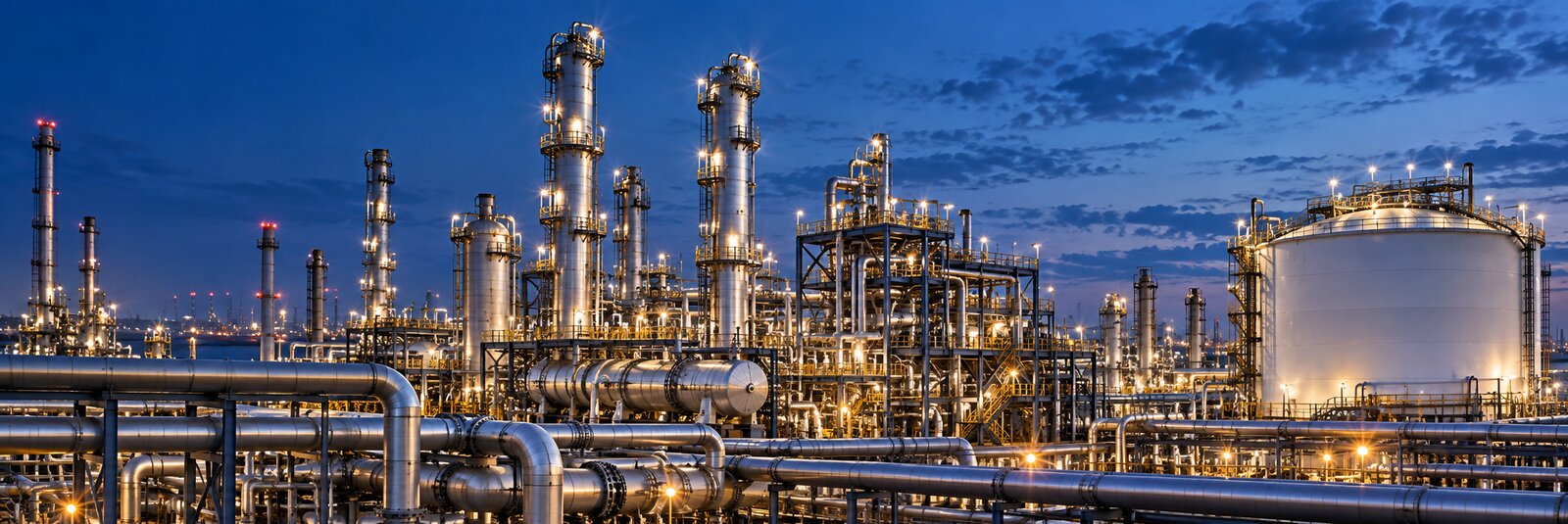
Hydrocarbon processing where catalyst protection, product specification and cryogenic integrity set the cleaning standard.
Oil & Gas Processing
Gas processing, crude stabilisation, amine sweetening, dehydration and NGL recovery, where residual moisture and particulates foul glycol and amine systems and damage compressor valves.
LNG
Liquefaction and cryogenic service, where any residual moisture becomes hydrate and ice blockage, and refrigerant purity decides compressor reliability.
Gas to Liquids
Syngas generation through Fischer-Tropsch synthesis and hydrocracking, where sulfur compounds and moisture poison the synthesis catalyst.
Petrochemical & Refining
Olefins, aromatics, polymers and refinery process units, where trace contaminants poison high-value catalysts and drive off-specification production.
Carbon Capture
Post-combustion capture and CO₂ compression, where contaminants degrade solvents, plug packing and filters, and cut capture rate.
Green Hydrogen & Ammonia
Electrolysis through to ammonia synthesis, where catalyst poisoning, membrane fouling and oxygen cleanliness are the governing risks.
Chemical & Process Plants
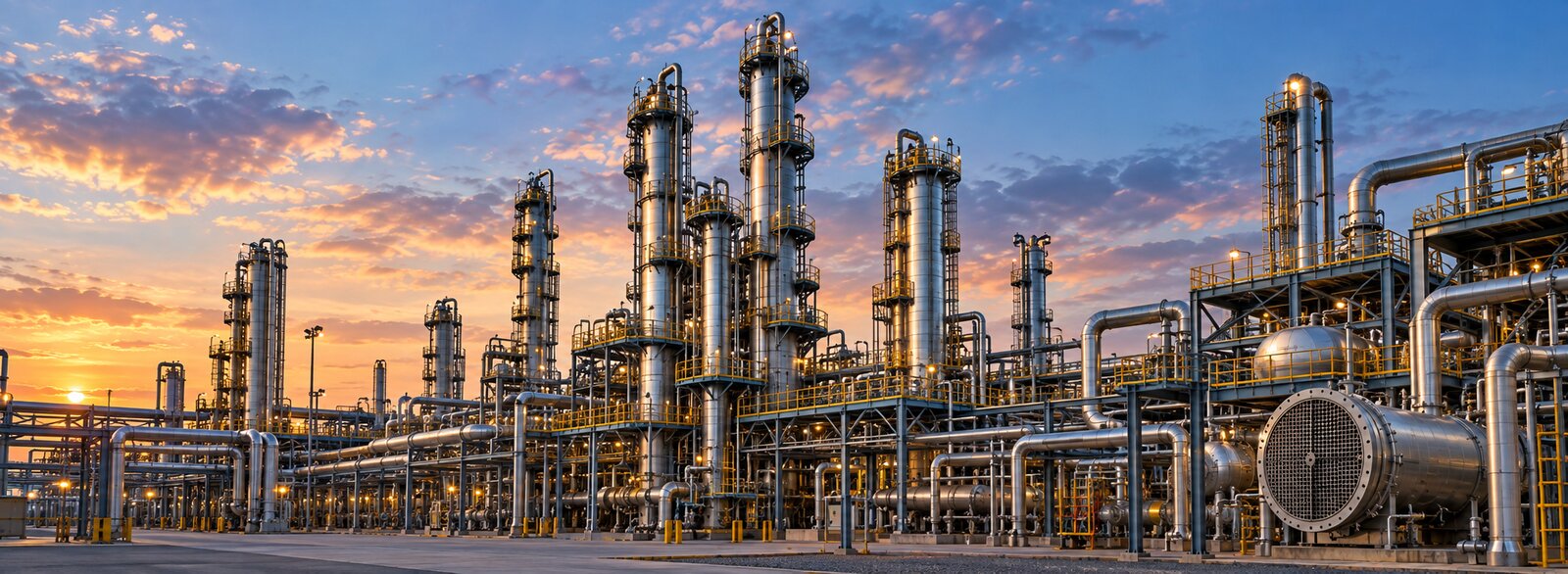
Synthesis and separation plants where catalyst beds, column internals and product purity tolerate no residual deposit.
Chemical Plant
Batch, continuous and specialty chemical production, where debris and residual oils contaminate catalysts, foul exchangers and plug process lines.
Methanol
Syngas-to-methanol synthesis, where copper-zinc oxide catalysts and reformer tube integrity are sensitive to sulfur, chlorides and mill scale.
Fertilizer
Urea, ammonia, phosphate and potash production, where clean synthesis loops and granulation systems decide on-specification output.
Sulfuric Acid
Sulfur-burning and metallurgical off-gas acid plants, where vanadium pentoxide catalyst beds and acid coolers are fouled by particulates and sulfur fines.
Glacial Acetic Acid
Methanol carbonylation to >99.8% purity, where rhodium and iridium catalysts and iodide promoters are intolerant of trace contamination.
Ethanol
Fermentation through dehydration, where system cleanliness governs yeast health, yield and fuel-grade moisture specification.
Metals & Heavy Industry
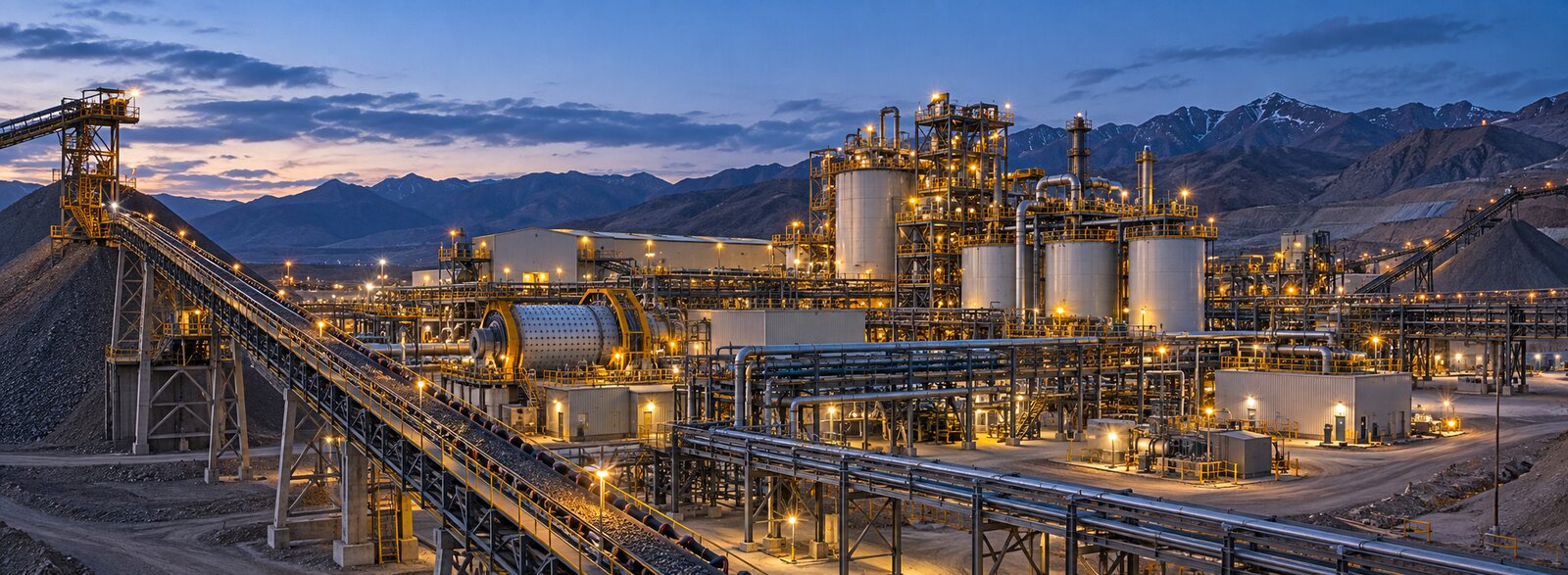
High-temperature, abrasive and corrosive processes where cooling circuits and hydraulic systems carry the highest consequence of contamination.
Steel Mill
Integrated and electric arc steelmaking, casting and rolling, where mill scale and slag fines plug cooling channels and damage hydraulic valves and bearings.
Smelter
Copper, aluminium, nickel, lead and zinc smelting, where electrolyte contamination and SO₂-rich environments accelerate corrosion and reduce metal recovery.
Mineral Concentrator
Crushing, grinding and flotation circuits, where debris and mill scale cause pump damage, line blockages and unstable recovery.
Paper Mill
Kraft, mechanical and recycled-fibre operations, where deposits on wires, felts and dryer cans cause web breaks and cut machine efficiency.
Water, Pharma & Critical Facilities
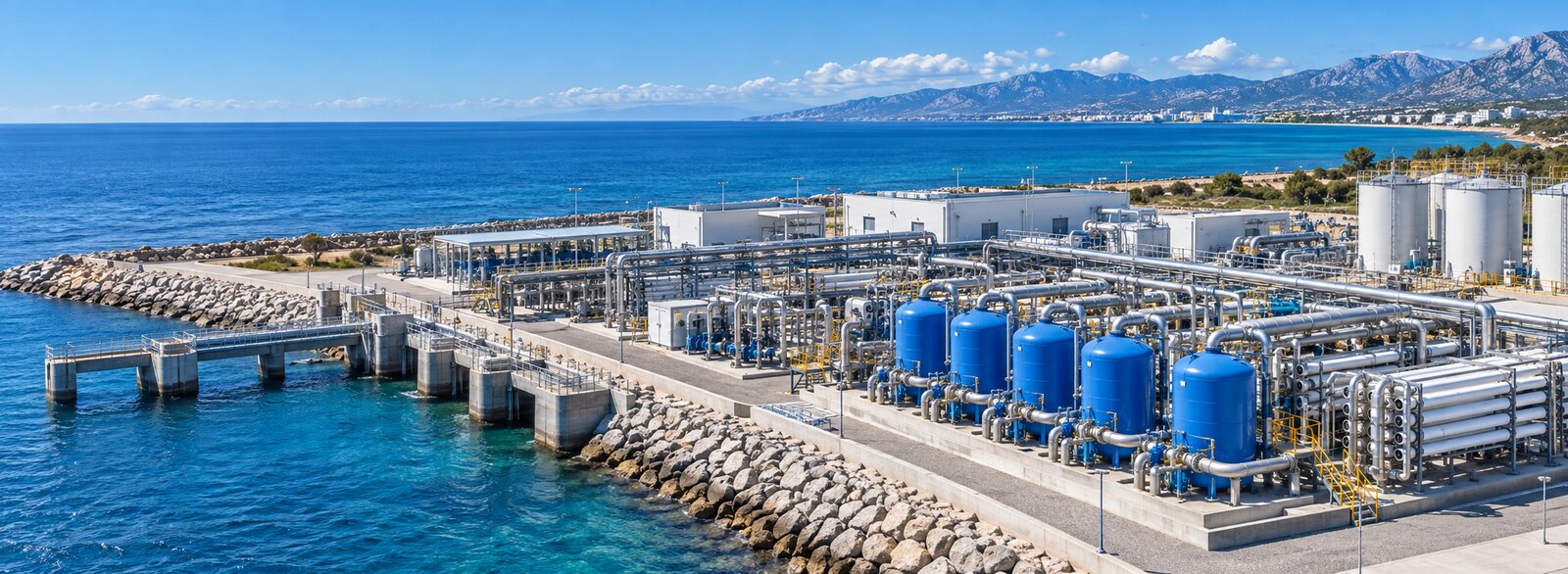
Processes where water quality, validated cleanliness or continuous uptime is the acceptance criterion.
Desalination
Seawater reverse osmosis and thermal desalination, where membrane fouling and high-pressure equipment damage decide recovery rate and permeate quality.
Wastewater Treatment & FGD
Wastewater treatment and flue gas desulphurisation, where HDPE shavings, biological fouling and scaling clog membranes, strainers and slurry piping.
Oxygen Plants
Cryogenic air separation producing >99.5% purity oxygen, where any residual hydrocarbon or oil is a fire and explosion hazard in oxygen-rich service.
Pharmaceutical
API, biologics and sterile injectable production, where validated cleanliness under GMP and USP requirements governs batch integrity.
Mission-critical cooling and heat rejection, where thin fouling films lift chiller approach temperatures and erode PUE in the largest OPEX line on campus.
Where the Consequences Are Highest
Cryogenic circuits that ice up. Steam paths that carry mill scale into a turbine. Catalyst beds poisoned by trace sulfur. Electrolyzer membranes fouled before first production. These are the facility types where contamination left behind during construction becomes an operational failure — and where the cleaning and commissioning sequence has to be engineered for the process rather than applied from a template.
Power Plants
Combined-cycle HRSGs, utility boilers, cogeneration and gas turbine plants, where construction debris and mill scale reach the turbine if they are not removed first.
Oil & Gas Processing
Gas processing, crude stabilisation, amine sweetening, dehydration and NGL recovery, where residual moisture and particulates foul glycol and amine systems and damage compressor valves.
LNG
Liquefaction and cryogenic service, where any residual moisture becomes hydrate and ice blockage, and refrigerant purity decides compressor reliability.
Petrochemical & Refining
Olefins, aromatics, polymers and refinery process units, where trace contaminants poison high-value catalysts and drive off-specification production.
Green Hydrogen & Ammonia
Electrolysis through to ammonia synthesis, where catalyst poisoning, membrane fouling and oxygen cleanliness are the governing risks.
Hyperscale Data Centers
Mission-critical cooling and heat rejection, where thin fouling films lift chiller approach temperatures and erode PUE in the largest OPEX line on campus.
Why Choose Volantis Group
The same engineering discipline applies whether the facility is a combined-cycle plant or a pharmaceutical suite. What changes is the procedure, the chemistry and the acceptance criteria.
Proven Results
Delivered worldwide with zero safety or environmental incidents.
Purpose-Built Equipment
Engineered in-house for cleaning performance and jobsite safety.
Detailed Planning
Cleaning matrices, acceptance criteria and completions documentation.
Full-Scope Support
Mechanical, I&E, controls and performance testing in one package.
Integrated Delivery
Global supply chain and logistics reach behind every scope.
Measurable Value
Faster startup, reduced risk and lower long-term maintenance.
Back to Solutions