Mission Critical Cooling, Commissioned with Confidence
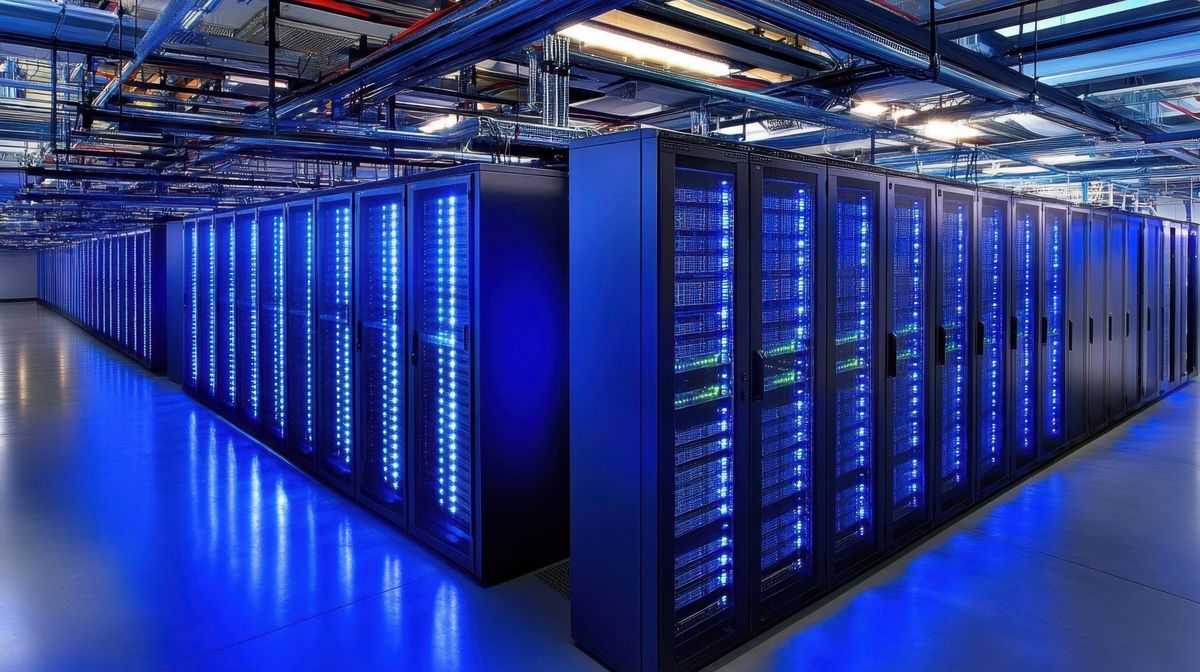
Hyperscale data centers and mission critical facilities operate under a single unbreakable rule: downtime is not an option. When cooling systems fail, the consequences cascade instantly — from overheated servers and data loss to revenue disruption and damaged reputation. Yet many facilities unknowingly compromise their reliability before a single rack goes live, simply by failing to properly commission their hydronic systems. Data center commissioning is not a closing formality. It is the foundation every uptime target rests on.
The reality is stark: newly fabricated piping and equipment arrive contaminated with mill scale, weld slag, debris, hydrocarbons, and particulates that silently degrade performance and accelerate failure. For facilities targeting 99.999% uptime — that's less than 5.26 minutes of downtime per year — the solution begins long before IT load arrives. It starts with engineered pre-commissioning and commissioning that ensures chilled water, condenser water, and closed-loop systems are built right, tested right, and perform right from first energization to decades of reliable operation.
Why Pre-Commissioning Matters: The Hidden Threats in New Systems
The assumption that new piping systems are clean is one of the costliest mistakes in data center construction. Even pristine-looking installations harbor contaminants that create four critical failure modes:
Heat Transfer Degradation
Fouling from residual debris increases the fouling factor in heat exchangers, reducing thermal efficiency and driving up energy costs. In facilities where cooling represents 40% or more of total power consumption, even marginal efficiency losses translate to significant operational expenses over the facility's lifetime.
Corrosion Acceleration
Unstable water chemistry resulting from construction debris leads to accelerated metal loss, continuous particulate generation, and progressive system degradation. What begins as surface contamination evolves into systemic corrosion that compromises equipment integrity and requires costly remediation.
Mechanical Damage
Suspended solids cause erosive wear on pump impellers, clog strainers, reduce net positive suction head (NPSH), and precipitate pump failures. In redundant N+1 configurations, undetected damage to standby equipment eliminates the redundancy operators depend on during peak loads or maintenance events.
System-Wide Risk
Scaling, microbial growth, and particulate migration don't respect system boundaries. Contamination spreads throughout the hydronic network, compromising CRAC and CRAH units, control valves, and instrumentation. A localized problem becomes a facility-wide vulnerability.
A rigorous pre-commissioning program eliminates these risks by creating clean surfaces, stable chemistry, and reliable performance architecture from day one. Cleaner systems deliver decades of predictable operation with lower maintenance costs and reduced risk of unplanned outages.
The VGICommissioning™ Process
A structured, operations-focused approach that validates not just that systems start, but that they perform reliably under real-world conditions.
1. Plan & Prepare
Design and scope review, detailed cleaning matrices, execution planning, risk assessment, and resource allocation
2. Clean & Condition
High-velocity flushing and chemical cleaning remove debris, oils, and scale, with passivation to create corrosion-resistant surfaces
3. Test & Verify
Loop checks, functional testing, system balancing, and performance testing confirm mechanical completion and design capacity
4. Start-Up & Tune
Controlled energization, system tuning, BAS integration, and operator training that prepares facility staff for peak performance
5. Handover
Formal performance verification, documentation, O&M manuals, and complete system turnover packages with long-term support protocols
Temporary Boilers: Commissioning Without IT Load
A unique challenge faces new data centers: mechanical plants are typically completed months before IT equipment is installed and generating heat load. How do you meaningfully test chillers, pumps, valves, and controls without the heat rejection that defines normal operation?
The answer is temporary boilers that provide artificial heat load, enabling realistic commissioning of the entire cooling chain. The process creates a complete thermal loop, maintaining the 12°F delta-T that represents actual operating conditions:
Temporary Boiler
Adds Heat
Chiller
Removes Heat
Cooling Tower
Rejects Heat
12°F delta-T
What Temporary Boilers Enable
- Chiller capacity testing: Load chillers to design capacity and verify performance specifications
- Sequencing validation: Prove chiller staging, lead/lag rotation, and automatic failover
- Temperature control: Verify supply and return temperatures meet design parameters
- Flow and control validation: Test pumps, control valves, and modulating devices under load
- BAS integration: Exercise bypasses, differential-pressure control, and automation sequences
- Condenser-water systems: Test cooling towers and condenser-water loops under realistic conditions
- Safety and redundancy: Verify alarms, safety interlocks, and N+1 redundancy functions
- Process heating: Provide heat for chemical cleaning, passivation, or glycol system commissioning
Two distinct boiler applications serve different purposes: commissioning load boilers add BTUs to load the chillers for functional testing, while process-heating boilers provide elevated temperatures required for chemical cleaning, passivation, and treatment processes.
Key Systems Commissioned for Data Center Reliability
Comprehensive commissioning addresses every component that affects thermal management and uptime. Critical systems include:
Chiller Plants and Chilled Water Systems
Including dedicated data center cooling loops
Cooling Towers and Condenser Water Systems
Heat rejection and water-side economizers
Boilers and Steam Systems
Humidification and process heating applications
Heat Exchangers, Tanks, and Vessels
Thermal storage and distribution equipment
Piping, Pumps, and Auxiliary Systems
Distribution networks and fluid handling
Instrumentation, Electrical, and Controls
Loop checks, functional testing, and operator interfaces
This comprehensive scope ensures no single-point failures exist in commissioned systems. From engineering and procedure development through final performance verification, every component is validated as operations-ready.
Proprietary Solutions That Deliver Results
Decades of commissioning experience have produced proprietary processes specifically engineered for mission critical applications:
FuryFlush™
High-velocity flushing of construction debris
VolSolv™
Chemical cleaning and passivation
VolSteamBlow™
Steam and heated recirculating gas cleaning
Pseudo-Azeotropic Drying
Advanced moisture removal for systems requiring absolute dryness
ChemV
Vapor-phase treatment technology for unique cleaning challenges
VGICommissioning™
Integrated execution methodology coordinating all commissioning activities
These proven processes, combined with detailed cleaning matrices and comprehensive engineering support, deliver faster startups, lower risk, and reduced long-term operational expenses compared to conventional approaches.
Why Choose Volantis Group for Mission Critical Commissioning
Data center operators, colocation providers, EPC firms, and facility managers choose Volantis Group because commissioning represents more than passing tests — it establishes the foundation for sustained reliability. Most recently, we commissioned a hyperscale facility in Red Oak, Texas. Our approach delivers:
- Operations-focused commissioning Systems validated for decades of reliable performance, not just initial startup
- Proven proprietary processes Field-tested technologies that consistently deliver superior results
- Comprehensive scope Full mechanical, I&E, controls, loop checks, functional and performance testing from a single provider
- Faster startup and lower risk Structured execution reduces schedule uncertainty and startup complications
- Complete documentation Detailed records and operator training that support ongoing operations
- Zero-incident safety culture: Measurable safety performance protecting personnel and facilities
From fluid system flushing and debris removal to final performance validation and operator handover, Volantis Group provides the specialized expertise mission critical facilities demand. Our project management and consulting services ensure commissioning integrates seamlessly with construction schedules while maintaining the rigor required for 99.999% uptime targets.
Building for Reliability: Uptime Starts Here
Clean hydronic systems support higher density, greater efficiency, and uninterrupted uptime. The path to exceptional data center uptime begins long before servers power on. It starts with the recognition that cooling systems must be engineered, constructed, cleaned, tested, and validated to exacting standards. Shortcuts during commissioning create vulnerabilities that persist throughout the facility lifecycle, while rigorous pre-commissioning establishes the clean, stable, optimized foundation that mission critical operations require.
Hyperscale data centers represent massive capital investments built to operate reliably for decades. The commissioning approach you choose determines whether that investment delivers expected returns or becomes a source of ongoing operational challenges and unplanned costs.
Mission critical cooling demands more than standard commissioning practices. It requires more than commissioning and startup as usual: specialized expertise, proven processes, and an unwavering commitment to operational excellence. Our engineered pre-commissioning and commissioning solutions ensure your facility achieves design performance and sustained reliability from first energization forward.
For more on the principles behind this work, see our articles on power plant commissioning best practices, pre-commissioning, and fluid system flushing.
Contact Volantis GroupBack to Solutions